
Book Report: Historical Theology

Historical Theology Book Review by Jeff Applegate
Click on Image to Read
Posted in Contemplations, Seminary | Tagged , , | Comments Off on Book Report: Historical Theology

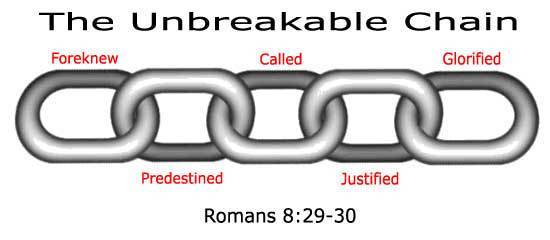
Exegesis Romans 8:29 – 39

Click Image to Open PDF
Posted in Contemplations, Seminary | Tagged , | Comments Off on Exegesis Romans 8:29 – 39

Book Report: The New Testament and The People of God

Book Review by Jeff Applegate – Spring 2020 (Click image to read)
Posted in Contemplations, Seminary | Tagged , , | Comments Off on Book Report: The New Testament and The People of God

The Old Testament: A Story of Love, Disobedience, Mercy, and Redemption

Old Testament Summary

The Old Testament: A Story of Love, Disobedience, Mercy and Redemption

This paper was written for a class at HBU as a brief overview of the Hebrew Bible. View as .PDF

Posted in Contemplations, Seminary | Tagged , , , | Comments Off on The Old Testament: A Story of Love, Disobedience, Mercy, and Redemption

The Great Experiment – Exchanging Liberty for Tyranny

In the mid 90’s before I had any children I bought this video. I wanted to be sure to pass on the godly heritage that was part of our founding documents, principal to our nation’s amazing success, and crucial to our freedom and survival of our nation.
Sadly, but not surprising, none of my three kids had any interest in watching this with me and I now no longer have a VCR to watch. With each passing generation our recognition and understanding of the importance of faith and virtue to the survival of our nation is fading. George Washington called the American political idea, “The Great Experiment”. Is it possible for a nation of free people to self-govern?

Our current U.S. Attorney General William P. Barr gave a speech to the law school and the de Nicola Center for Ethics and Culture at the University of Notre Dame on October 11, 2019. He does an outstanding job describing why the Great Experiment was such a novel idea and describes the “supreme test” the founders feared could destroy our nation and is now being realized. Click here to read.

What hope do we have? We can and should pursue all traditional means of influencing social policy and culture by choosing to live and model Christian virtue, vote and work to influence the political system, run for political office, be active in our communities and fight in the courts, but our hope is not in the things of man. Our true hope is in the power of the Holy Spirit. God’s hand and influence has been involved in forming, protecting and blessing our nation. He is still in control and the Holy Spirit of God can powerfully move at a moments notice to change the hearts of men. Our fervent prayer for our nation is our greatest asset. Join me in earnestly praying for our nation and those that God will choose to save our land.

2 Chronicles 7:14 14 if my people, who are called by my name, will humble themselves and pray and seek my face and turn from their wicked ways, then I will hear from heaven, and I will forgive their sin and will heal their land.

Posted in Contemplations, Family Leadership | Tagged , , , | Comments Off on The Great Experiment – Exchanging Liberty for Tyranny

Book Highlights: If You Can Keep It, Eric Metaxas

This July 1st weekend Eric Metaxas visited our church and I thought I would add If You Can Keep It to my 4th of July reading list. Interestingly, I took this book with me on a trip to work with vendors in communist China. I have read some of his other books including Seven Men and the Secrets of their Greatness, Amazing Grace, and Bonhoeffer. Have you ever been around someone and just know that they are on another intellectual level and you and have to work just to keep up with the conversation. Unfortunately, I run into this situation often and feel this way when around Eric. I have visited with Eric on a couple occasions as Eric is a co-founder of The New Canaan Society, which I also participate in the local meetings, and years ago my wife brought him in to Houston as the Distinguished Speaker at Second Baptist School. Eric is a gifted in researcher and communicator. He brings to life the thoughts and lives of great men that have dared to stand up for truth and virtue in the face of cultural evil and great adversity. These men have positively influenced our history and culture and are worthy of study and admiration. Eric’s writing taps into their personality and core beliefs that drove them to change the course of history. Occasionally, I take the time after reading a book to write down some of the highlights so I can retain and share with others. The following is not a book summary, but are some of my highlights and notable thoughts from If You Can Keep It. Even if you don’t read all my notes, just taste a few of the noble thoughts that Eric extracts from our forefathers.

  • The Promise: “Nothing is more wonderful than the art of being free, but nothing is harder to learn how to use than freedom.” -Alexis de Tocqueville, Democracy in America – Page 1
  • If we Americans cease to know that we are part of that group charged with the terrible and wonderful burden of keeping this glorious promise, the promise is already being broken and will soon be irrevocably so. So Franklin’s question is to you and me: Can we keep it? and How? – Page 11
  • Once it goes out, it goes out forever. If the flame given to us goes out, we will not only lose the light ourselves forever but will also lose the ability to pass it along to all those others who are waiting for it. That is what makes keeping it so important and the thought of letting it go out so terrible and tragic. – Page 14
  • America exists primarily not for itself but for others. This is a strange idea, and easily misunderstood, so we should take a moment to clarify what it means. – Page 21
  • We have to acknowledge that the United States has been remarkably and consistently generous in sharing what it has, whether material things or ideas. We really have demonstrated our belief in the idea that if we bless others, we will be blessed. It’s the “rising tide that lifts all boats” philosophy first popularized by John F. Kennedy. We’ve believed that if we help others it will come back to us, and we haven’t done this in a calculating way. There is something in the American cultural character that is simply like this, that believes this is the right way to conduct ourselves. – Page 23
  • If we have ever been great, it is only because we have been good. If we have ever been great, it is only because we have longed to help make others great too. That earnest humility and generosity must be attended to. – Page 25
  • True freedom must be an “ordered freedom,” at the center of which is what we call “self government”. So to be clear: People would not have freedom from government, but would have freedom from tyrannous government, or from government that might easily become tyrannous. The ordered freedom given to us by the founders was meant to enable the people to govern themselves. – Page 29
  • The first of the two things was simply the structure of the government. A view of mankind as fallen meant that a government must be created that took this into account and whose very structure limited the power of any one part, lest that power grow and take over, devolving into tyranny. It was an observable fact of history that everyone wanted power and more power. If people had not power they wanted to get it, and if someone had power he wanted to keep it – and if possible to get more of it. So the founders must create a government that somehow took this into account, that was structured so that this fallen and selfish human desire for power actually worked against itself. – Page 32
  • They knew that the religion was necessary to self government was not coerced but free. True religion must be free religion. This was something new, and this was what made possible the unprecedented experiment in liberty that came to be known as the United States of America. – Page 35
  • Freedom must have religion and religion must have freedom. One without the other was in fact neither. Freedom without religion would devolve into license or end in tyranny; and religion without freedom would really be only another expression of tyranny. The challenge was to combine them. Somehow. So yes, there was something called the social contract, where we each give up something to the community – surrender certain freedoms and pay taxes to a government so that the laws can be enforced. And yes, there was something called the law that would enforce the social contract. , and there was a document called the Constitution that would be the basis of those laws. But the founders understood that what they had in mind had to be much fore than these things. What was required was a virtuous people who were prepared to handle the great freedom being proposed….The founders understood that the more each person governed himself, the less there would be a need for strong government, and by their estimation the American people were ready. – Page 36
  • The “liberal” misunderstanding of American freedom, in short, is when freedom – or liberty – is confused with license. License to do anything at any time is not what the founders had in mind when they were talking about freedom.
  • The point is that there is so much that needs to be in place to make what we call freedom and self-government work that to simply tell someone he is free and bid him govern himself is like saying because of the Second Amendment we could hand out loaded guns to children. There are tremendous responsibilities that come with self-government…This idea that “democratic” voting is all that’s necessary for freedom and self-government has been demonstrated many times to be false. In Germany in the 1930s the people “freely” elected a government that would eventually do all it could to destroy their freedoms, using the “democratic” process along the way….voting purely for one’s self interest can work against freedom. Someone might want to vote for a person he knows as a friend, but what if he knows that the policies of his friend’s opponent would actually be better for the country? Or what if we know a candidate’s policies will help us personally but in the end will harm the country? Don’t we voters bear a serious responsibility to think about the whole country and and about its future? – Page 43-43
  • If the voter is not voluntarily selfless to some extent, and does not merely think of himself but of others; and if he does not think just about the present, but about the future, it all falls apart over time. Self-government will not work unless the citizens bear the responsibility to vote in such a way that continues their freedoms and their ability to have free elections, that continues their economic prosperity. They have to vote in a way that does not trade the future for the present. This “conservative” misunderstanding of freedom is closely linked to the false idea that the free market will by itself magically lead to all kinds of freedoms. – Page 44
  • And as I have said, the government cannot force us to be “good” or “moral” or “selfless.” The Constitution simply doesn’t have that power. But if being good and moral and selfless is necessary for our form of government to work properly over the long run, and if the founders understood that, how is it supposed to happen? – Page 45
  • If you take God and faith and morality out of the equation everything inevitably falls apart. – Page 48
  • The Golden Triangle of Freedom. “Liberty cannot be established without morality, nor without faith” – Alexis de Tocqueville – Page 51
  • The Golden Triangle of Freedom is, when reduced to its most basic form, that freedom requires virtue; virtue requires faith; and faith requires freedom. – Page 54
  • Not until I went into the churches of America and heard her pulpits aflame with righteousness did I understand the secret of her genius and power. America is great because she is good, and if America ever ceases to be good, she will cease to be great. – Tocqueville …..This was something about the culture of America, about Americans’ shared values. The difference was not in their genetic makeup, nor in their drinking water, bor even in their beliefs. It was in their behavior. – Page 59
  • “Upon my arrival in the United States the religious aspect of the country was the first thing that struck my attention; and the longer I stayed there, the more I perceived the great political consequences resulting from this new state of things. In France I had almost always seen the spirit of religion and the spirit of freedom marching in opposite directions. But in America I found they were intimately united and that they reigned in common over the same country. – Tocqueville – Page 63
  • He understood that the law could not force people to do what was right. …Where there is not human sovereign there must be another sovereign, and for Americans that sovereign was God himself, to whom they would voluntarily submit themselves. – Page 64
  • The Establishment Clause in the Constitution, expressing the idea that the national government cannot take sides with one church over another. This is an astonishing notion in the history of the world, that a state would not be directly or officially affiliated with a religious institution. – Page 71
  • The financial meltdown of 2008…So the Federal Government decided it would step in and use your taxpayer money to bail out certain select companies – but not bail out other companies. In other words, the government began deciding who could fail and who must win. It was a scary moment for America, this idea that the government, with all its power and resources, could begin to take sides in that way. – Page 74
  • Regarding George Whitefield (Scottish Evangelist)…It was this second trip to America that would forever alter the landscape of the New World, which in turn would affect the rest of the world. Because it would unite that scattering of peoples into a single people, one that together saw the world differently than any had before and that was prepared to depart from history in a way none had ever done. What would happen during this time in the thirteen colonies would begin the process of uniting them into something greater than the sum of their disparate parts, would begin the process of preparing them to become the United States of America. – Page 100
  • Whitefield’s message that people must choose to be “born again” and must accept their new identity in Christ. Because Presbyterians and Congregationalists and Quakers and Baptists and others all heard the same message and all were free to respond similarly, Americans were becoming united in the wake of his nonstop preaching. People were being offered a new identity that fit well with the American way of thinking. Some were German by background and some were French and some were English, but none of it mattered: They were all equal under God; they were all Americans. This was something new, and identity that was separate from one’s ethnicity or one’s denomination. To be an American meant to buy into a new set of ideas about one’s equal status in God’s eyes – and by dint of this to be accepted into a new community, to be an American. – Page 103
  • Church rolls swelled and those who had merely been filling the pews on Sunday suddenly understood why they were there. The Gospel came alive to them and they to it; and their common faith in God became the central animating force of the thirteen colonies that would in a few decades become the United States of America. William Cooper, a prominent Boston minister, hailed Whitefield as “the wonder of the age.” – Page 108
  • George Whitefield has been called the spiritual founding father of the United States. – Page 113
  • When we take the full measure of Whitefield’s role in creating what would become the United States, who can help but wonder whether our history is one in which God himself – and if not God, then at least those who are motivated by the idea of God and all it portends – has played a central role? – Page 114
  • Unless we celebrate our common ideals and stories – and our common story – and unless we are unified in celebrating those things, we can never appreciate who we are and what we have. If we don’t feel the power of what has gone before, we will hardly be drawn to do our part in perpetuating American liberty. That’s what songs and poems and stories and paintings and sculptures can do. So already to the extent that we have ceased hearing and memorizing poems like Longfellow’s poem about Paul Revere, we have in some terrible sense ceased to be America. By drifting along for half a century as our common stories and heroes have faded or been pushed away, we have increasingly become America in name only. And we haven’t even realized it….America, that great and fragile experiment in liberty, has become cut off from its roots. We need to see this and we need to do all we can to remedy it, and quickly. – Page 132
  • We need leaders who themselves lover the country and the freedoms of this country more than they love themselves and their own careers or reputations or “legacies.” That is why when a leader is caught doing something ignoble, the most noble thing to do, typically, is to resign, knowing that in the scandal that will be dragged out if they don’t, the country will be adversely affected. – Page 153
  • And in a nation where a culture of virtue is crucial to the entire system of self-government, character in our leaders is no small thing. We may again recall John Adams’s statement that the Constitution cannot contain our untoward passions – that will break through the Constitution as easily “as a whale goes through a net.” So we need a culture of virtue, and our leaders have a vital role to play in that regard. – Page 154
  • “More states have perished because of a violation of their mores than because of a violation of their Laws.” …No matter what the parents might say with their mouths, it is their example more than anything that speaks to the child about how to behave. – Page 155
  • But far more important is the use of specific words and phrases like “reputation”, “patient virtue,” “dignity”, “glory”, and “sacred honor.”…What we see in George Washington here is a man who lives in a world in which virtue and honor are accepted as vital to the life they all wish to lead. – Page 165
  • Speaking of the time of William Wilberforce – There was open disregard and even active disdain for public and private morality in Great Britain. In a word, it was fashionable to be immoral, especially among the upper classes. Public drunkenness, en on the very floor of Parliament, was common. – Page 169
  • Wilberforce understood the idea that the law itself is a “teacher” and will lead people toward what it prescribes and away from what it prohibits. But he knew that a debased culture cannot be stemmed through legislation along. Indeed if one wishes to make certain laws, one must change the culture first, else those laws will never be passed. … Regarding Wilberforce’s fight against the slave trade in Britain…He must work outside the law, and within the culture, to change the law. In other words, unless he could create enough of a culture of virtue for people and their parliamentary representatives to want to vote against their immediate best interests and for the best interests of the people they wold never meet and the long term interests of the nation at large, the glimmerings of democracy in Britain would be worthless. – Page 173
  • If at any point in a republic of self-government the people begin to distrust their leaders as somehow corrupt or a more concerned with themselves than with those they serve, the whole skein of self-government begins to unravel and is fatally threatened. …In order for self-government to work, citizens must believe that the larger order to which they are giving themselves is essentially trustworthy and solid. – Page 176
  • As President Truman put it, “Being an American is more than a matter of where your parents came from. It is a belief that all men are created free and equal.” – Page 184
  • John Winthrop, Governor of the new Massachusetts Bay Colony…referring to Jesus’s statement from the Gospel of Matthew: “You are the light of the world. A city that is set on a hill cannot be hid.”
  • In Genesis Chapter 12, God speaks to Abraham about how he will use him to bring the nation of Israel into being, but he makes clear to Abraham that the point of it is that Israel will bless others beyond itself. It is less about Israel than about the God who chose Israel to be his vessel to reach the rest of the world. That is the great blessing and the terrible burden of being chosen by God. So far from being a selfish idea, it is the idea of living for others – of showing them a new way of living – that was a the heart of America. – Page 188
  • The glory of our existence is that we exist for others. It is at the heart of who we are and hope forever to be. – Page 189
  • We are not like others, and we may not judge ourselves as though we were like others. We have a special mission and a calling to be an example to the world, and to do what we can with our gifts to help others. Reading Kennedy, we understand that we cannot dismiss this as a conservative idea resurrected by Reagan. – Page 193
  • Lincoln…It is there that he calls us God’s “almost chosen people,” a phrase that is a sparkling distillation of the ideas behind what we have called American exceptionalism. This is because it makes clear that Lincoln did not think America’s excceptionalism a mere accident of history. Indeed, a few lines earlier he makes it clear that he sees our special role in history much as John Winthrop saw it and as many min in th etwo centuries connecting them saw it: as nothing less than a holy calling. But this is the point. We were not called by God for ourselves but for the whole world. – Page 211
  • America was indeed great, but precisely because she did not merely exist for herself. She was exceptional because she pointed outward, beyond herself. Her place in history was always to reach beyond herself-and once she forgot this, she would cease to be America. In reminding the men of the New Jersey legislature of their common history, this is the point Lincoln was making. – Page 212
  • Lincoln felt that America had been called by God to fulfill a role and to perform a duty for the rest of the world. It was not something to be giddy about. Far from it. He understood that to be chosen by God-as the Jews had been chosen by God, and as the prophets had been chosen by God, and as the Messiah had been chosen by God- was something that was a profound and sacred and even terrifying obligation. One would not wish to be chosen, but one might nobly be willing to be chosen, despite the suffering that it would surely entail. – Page 213
  • For them it was God who had the idea in the first place and who had called America as a people to accomplish this task. It was for his purposes in history, to bless the whole world with the freedoms we had enjoyed. So the idea that America was to be a blessing to the rest of the world and to the future was inextricably intertwined with the God of the Bible, whom these people believed had led them to do what they were doing. – Page 214
  • And if we turn away from the moral law, we forfeit the blessings of God. …Lincoln new when he faced the crisis of the Civil War that what America was doing had everything to do with that moral law. Could we keep it and continue to be favored by God? – Page 217
  • Referencing a quote in Lincoln’s inaugural speech, “mystic chords of memory”. We cannot avoid it: Lincoln is talking about love of country. That’s what the appeal in his inaugural speech is about. It is about coming together as a people over those things that truly bind us together. Lincoln is saying that the love of country is necessary, that America cannot and will not survive without it. – Page 223
  • Ronald Reagan once said, “If we forget what we did, we won’t know who we are.” – Page 225
  • But the real problems arose when somehow we split into two camps over this and fell into a perpetual ideological battle. One side seemed only to be able to see the bad things America had done, and seemed to have become enamored with the negative narrative that cast us as the great villain on the wold stage; and the other side seemed only to be able so see the faults with that narrative, and seemed to have become enamored of the positive narrative that cast us as the great savior of the world. This perpetual ideological battle has become a dangerous thing for America and for the wold both. To truly love America, one must somehow see both sides simultaneously. – Page 226
  • The only question is whether, having seen both, we can repent of the one and rejoice and be inspired by the other. Or whether we will let one of them tempt us so far away from the other that we have a deeply distorted view. – Page 227
  • We must choose what we look at; and we must choose what we look beyond. But if our focus is on what is ugly and evil and dark, we will strangely strengthen the ugly and evil and dark. – Page 231
  • To love someone is to see the best in them and to act toward them as though they were that best. To call them higher. To treat them with respect and love is to call them to be worthy of that respect and that love. And we can say that to love someone is not to avoid seeing their flaws, but to avoid so focusing on them that the person gets a feeling of hopelessness about changing them. – Page 233
  • So those of us who have adopted a cynical view of this nation and who have a dour, negative view of it are doing our part in making sure that our negative view of America is what America becomes. Somehow, with our views and words and actions, we are guaranteeing that America does not become what she should. You might even say that when we do this we are cursing America, in our won way making sure she fail.s. Of course, this is the opposite of love and is wrong. It not only harms America but harms the world beyond America, which, as we have said, America exists to bless. On the other hand, those who in response to this negative attitude toward America swerve across the road into the ditch on the other side are equally wrong. To pretend that America can do no wrong is just like the parent who refuses to deal with the issues that are clearly problems in their child’s life. To so ignore them that one helps them to continue is also cursing that child, that country. Bot sides are not saying “God bless America” but are really calling on God to curse America, a country that Lincoln called “the best great hope of Earth.” – Page 234
  • God repeatedly instructs the Israelites to do things on certain dates and to create monuments, precisely so that they will never forget what they have experienced. He knows that if they remember these things it will be that much harder for them to stray, and so every year, among other things, Jews celebrate Passover, with many specific rituals about how and what to eat and what prayers to recite. Every culture must have rituals and in America we have a few, but even in celebrating them we often forget why we are celebrating them. ….Making every Fourth of July, or every Thanksgiving , or every Memorial Day, a day on which we specifically remember something historical about that day would be a way to begin. – Page 238
  • It’s the love of God, a love that loves even though it is not reciprocated. It is a love that simply gives and gives, and in so doing it breaks our hearts. We even saw it in the firefighters with their heavy gear, marching into the towers that morning, up and up and up as everyone else was racing down and out and away. It is a picture of goodness and it breaks our hearts every time. – Page 251
  • After all that had happened to America she was still there, saying: Welcome. We want you. You are why we are here. You are America. You who are not yet Americans. You are our future. Come. there she was, still standing and still holding out her torch. – Page 252

Thank you Eric for reminding us of who we are, how we got here, what was done for us, for sharing your story and for your work to pass the torch to the next generation. Join me in praying for our America and that we as citizens of this great nation will keep the promise that has been passed on to us. May God bless America.

The Pledge of Allegiance:
I pledge Allegiance to the flag
of the United States of America
and to the Republic for which it stands,
one nation under God, indivisible,
with Liberty and Justice for all.

The following video is from Eric’s sermon on his book If You Can Keep It to Second Baptist Church on Saturday July 1, 2019.
Posted in Family Vision, Mission, Core Values | Tagged , , | Comments Off on Book Highlights: If You Can Keep It, Eric Metaxas

Entrepreneurial or Entrepreneur?

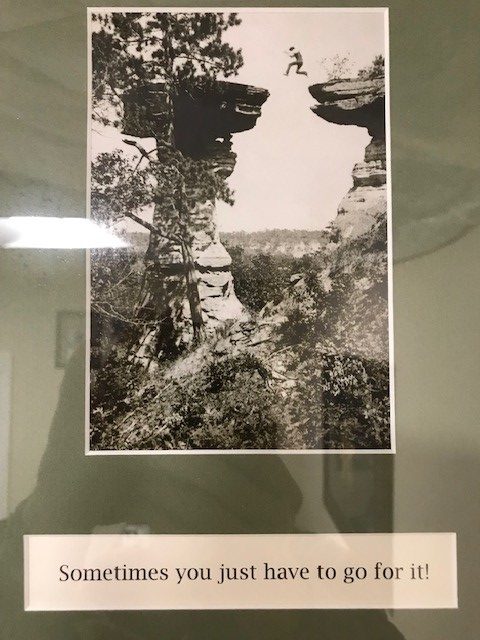
A card given to me by my parents after I closed on my business and displayed in my office

As a kid I never wanted to be on a work schedule and found that I could earn more money if I mowed lawns, painted houses or project work.  After failing second semester Calculus in Baylor’s Engineering School I changed my major to business and graduated from Baylor University with a double major in Entrepreneurial Management and Finance.  In my heart I knew I wanted to be an entrepreneur, but had no idea at the time where to start.  I recognized I needed experience and got a job like most of my friends.  My job was in sales and I viewed it as a treasure hunt.  My boss, Robin Hood,(yes that is his real name) taught me the lesson “where there is chaos, there is opportunity” and I explored the globe creating opportunities for my company by bringing order to chaos through the dependable supply of quality products to others.  During my journey I came across many opportunities that were not a fit for my company and was tempted to step out on my own to capitalize on these opportunities.  However, I was married, had a mortgage, 3 children and bills to pay.  This is the scenario that plays out in so many talented people that have great potential and are suppressed by the fear of failure and the seduction of financial security.  It was not until I left my job to test a new career and found myself without a job a year later that I thought I had the courage to be an entrepreneur.  I spent 6 months looking for a manufacturing company to buy and after exploring several companies and failing to close on two offers, I settled for a job to turn around another company with an option to purchase the business.  I thought of myself as an entrepreneur.  I developed the vision, mission, core values and set off to re-build this 70 year old injection molding company.  After 10 years of building this company and my purchase option expired, my dream ended when I was notified that this now successful company would not be sold as agreed.

Becoming an Entrepreneur

The future scenario was unacceptable and I had to decide how I would provide for my family.  This was the end of the line and the door of ownership had closed for me.  I was able to find a company in the same town that was much smaller and much less mature in regard to systems, procedures and capabilities.  I did not want to start over, but had no choice.  The oldest of my 3 children was a senior in high school with plans to attend Auburn University.  My other two children were in private school and not far behind attending college.  This was not the time of life I would have planned to take every liquid asset that I had including my college savings, put them at risk to purchase a small business and sign a bank note with unlimited personal liability to pay back the debts.  This is when I realized I really had never been an entrepreneur.  I had been entrepreneurial, but until you put everything you own at risk including your kids college funds months before leaving for college and sign up for unlimited personal guarantees (or something like this) you have not taken the leap of a true entrepreneur.

Now I was on my own with an office manager, a small group of employees, an old building and a bunch of machines I did not personally know how to operate.  I had to make a payroll each week and monthly had to make a real estate, business bank loan and all the material and utility bills.  I recall receiving one of our first receivables from our largest customer at the time and calling them to thank them.  They had no idea how much that check meant to me.  Now as we approach our 5 year anniversary we have again put a vision, mission, core values in place, grown to nearly 100 teammates, replaced and added equipment that I still do not know how to personally operate, have solid systems and procedures, and have been able to put away some savings for a rainy day.  We are making plans to go “All In” again and put much of our savings into a new building and sign another round of unlimited personal guarantees.  I told my dad that I wanted to retire at 50.  He has kidded me that I am working more hours now than at any time in my career, but I remind him that I did retire.  I retired from working for someone else and thoroughly enjoy the risks and rewards that come from being an entrepreneur.  I enjoy my time while on vacation, but equally enjoy my time working with the next generation of young men and women to build a business and future for their families.  Not everyone is cut out to be an entrepreneur.  For those that are I would offer a few lessons learned.

  1. Prepare for success.  Many say you should jump in and fail fast.  There is value in gaining experience and will significantly increase the odds of success.
  2. The time to make a friend is before you need them.  Invest in building relationships with others.  Suppliers, bankers, insurance agents, customers, and talented people.  When it is up to you to figure out every problem you will be glad to have a friend to call and friends help friends when they are in need.
  3. Don’t wait.  There is never a good time to “risk it all” and the longer you wait the harder it is to make the jump.
  4. We all bet our lives on something.  After leaping away from apparent security into a do-or-die, sink-or-swim scenario I have a much clearer picture of the ultimate decision we all make to determine our eternal destiny.  I accepted Jesus as my savior at a young age almost as an inherited faith from my parents.  As if you inherited a business, eventually you have to understand the business, take control, and be responsibility for it’s success or failure.  As I matured, I questioned my faith as a skeptic and worked through doubts and reasoned why I believed what I believe.  Life’s experience and my own reasoning have galvanized my faith as a Jesus follower and complete trust in Him for my redemption, salvation and truth to live my life.  As an entrepreneur takes that “leap of faith” and risks all your financial security, so must we all confront the question what happens when we die and take a leap of faith.  It may be a simple faith as a child or as a highly intellectual and reasoned faith of C.S. Lewis, eventually we all have to make a decision and go “All In” on what we believe.  There is no middle ground.  To put off or not make the leap is still a decision.  We are all going to die.  We all have to answer the question that Jesus asked his disciples.  Luke 9:20  And He said to them, “But who do you say that I am?” The apostle Peter goes on to answer that question for himself, but we all have to answer that question.  Consider what Jesus says John 14:6 Jesus said to him, “I am the way, and the truth, and the life; no one comes to the Father but through Me.  For More
  5. Don’t worry about the things you can’t control.  There are many things to worry about as an entrepreneur.  Worry can absolutely “eat you alive” and steal your joy.  Philippians 4:6 Be anxious for nothing, but in everything by prayer and supplication with thanksgiving let your requests be made known to God.  And the peace of God, which surpasses all comprehension, will guard your hearts and your minds in Christ Jesus.  There are many uncertainties and circumstance which we do not control as an entrepreneur.  Find your confidence, not in yourself, but in God and the fact that He is in control.  God will never leave you.  Joshua 1:9 Have I not commanded you? Be strong and courageous! Do not tremble or be dismayed, for the Lord your God is with you wherever you go.  Even when things do not go your way you may experience peace.  John 16:33  These things I have spoken to you, so that you may have peace.  In the world you have tribulation, but take courage; I have overcome the world.  No doubt our natural tendency is to retreat to worry in uncertainty so start each day with bringing your focus back to God and away from yourself.  Matthew 6:25  For this reason I say to you, do not be worried about your life, as to what you will eat or what you will drink; for for your body, as to what you will put on.  Is not life more than food, and the body more than clothing?  Verse 33 But seek first His kingdom and His righteousness, and all these things will be added to you.  Make a point every day to re-calibrate and seek Him first as our creator, provider, defender, and supplier of all we need.

I think true entrepreneurs are hard-wired and gifted by God to dream, plan, take action and successfully execute on the business vision that is in their heart.  I believe there is a graduated “entrepreneur scale” that we fall on that spans from entrepreneurial to entrepreneur, but a point along that scale that requires a leap.  A leap that requires faith and is when the entrepreneur is born.

Posted in Contemplations | Tagged , | Comments Off on Entrepreneurial or Entrepreneur?

My People

Catching up with a few of my people

In the past couple months I experienced an awesome feeling that swelled my heart with joy and caught me completely off guard.  These experiences blessed me immensely with a picture of God’s feelings toward those who know Him and have trusted in Him.  My friend hosts a celebration of the Feast of Tabernacles and it is no small celebration.  A few hundred guests come to camp under the Texas stars during the God-ordained time of the full moon each fall to celebrate God’s redemption plan for man with worship and great fellowship.  It happens that many people who I have invested significant time and shared my favorite life experiences and memories come from around the country with their families for this weekend.  Most had arrived on Friday and I drove in from Houston to join them Saturday morning not really knowing who was coming.  As I came to the front porch, there gathered was a 15-20 men and women that I had come to share deep friendship at different times and different eras of my life.  All gathered together in this one place at this one time.  My heart immediately filled with great joy and overflowed with love that I have for these friends.  These are “All My People”, I thought, the people that I have shared many fun adventures and shared difficulties that we all experience in our life journey.  Some of these friendships had been knit together over the years and some have yet to know each other, but “All My People” whom I love were there.  As I reflected on that day I know that is how God must feel when we come together to worship Him and will greet us as we join Him in eternity.  God’s heart will be filled with joy and overflowing with love that all “My People” are here with me.

My second experience was this November weekend in 2018 when my college roommate invited me to come to our 30th year reunion at Baylor Homecoming.  I am still struggling to get my mind around a 30 year college reunion.  I can’t be this old?  Julie and I attended a couple events where we walked in to a room, not knowing who would attend and if we would know anyone.  Of the 50 or so that were present were “All My People”.  The people who forged my best memories at Baylor and though more years have passed since our graduation than the years we had lived when we were last together, it was as if not a day had passed when we were reunited.

I am greatly blessed with many life-long friends. What a great picture and experience He has given me to share with you.  Oh how our hearts will be filled with joy and overflowing with the love He has given us when we reunite again with God and “All My People”.

Posted in Contemplations | Comments Off on My People

Carpe Diem

I started this blog many years ago with the goal to share ideas and experiences of leading your family and examples of things we did to create memories.  At the time all our kids were young and pretty much always available for an adventure.  As they have grown, left home, and moved to different states and towns the time we have to make memories and shape their life is limited.  My son Ben is currently a sophomore at Colorado State University.  We were talking the other day and he said he wanted to hike Long’s Peak in Estes Park.  I have been to Estes Park many times and never hiked Long’s Peak.  So, when he said he wanted to hike Long’s I immediately asked if that was an invitation and began to plan a trip.  Long’s Peak is 14,259′.  You start the hike at 3:00 a.m. at 9,500′ and climb 5,000′ in 7.5 miles to the top.

The Boulder Field
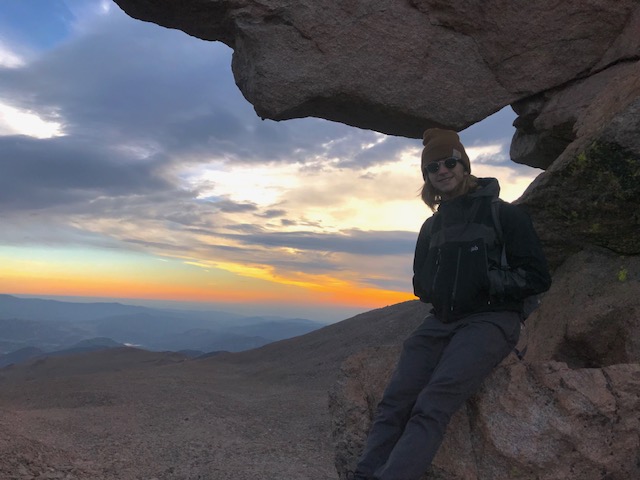
The keyhole at sunrise
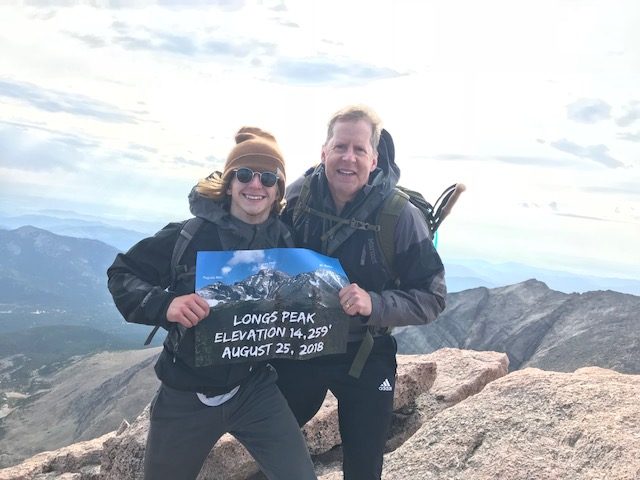
Long’s Peak Summit

View from Long’s Peak

The way home

The opportunities to share adventures and create memories will continue to diminish as their schedules and responsibilities grow.  When you get an opportunity jump on it and make it happen.  We all have lots of responsibilities, conflicts and excuses that can keep us from sharing these experiences.  Make it a priority, seize the moment and make a positive memory every chance you get.

p.s. Do Long’s Peak while you are young.  The 7.5 mile hike down the boulders is a killer.

Posted in Camp Applegate, Family Adventures, Family Leadership | Tagged , | Comments Off on Carpe Diem

Jesus Breaks Social Barriers to Build Bridges for All Men

1 John 1:9 If we confess our sins, He is faithful and righteous to forgive us our sins and to cleanse us from all unrighteousness

I recently heard Trey Gowdy speaking about the book he co-authored with Tim Scott, Unified: How Our Unlikely Friendship Gives Us Hope for a Divided Country.  Trey gave a great illustration of Jesus that we can all follow as the great bridge builder between all men breaking down every social barrier of the time to bring us salvation.  I read his book and am in agreement that despite our differences, we share so many things in common and have hope because of the things we share in common.  However, I liked the point he made about Jesus in his sermon and it was not emphasized in his book.  So I wanted to study more on how Jesus bridged mankind by breaking with the social barriers that we still struggle with today.

Sin in the hearts of mankind has always divided the world and today is no different.  Mankind disregards the majority of common values and ideas that we share and has identified and leveraged the differences between men to create polarizing division.  Common throughout history, we continue to identify and divide ourselves by gender, race, religion, nationality, wealth and class, political party, and every difference that we can find to separate us.  Seeking to preserve our kind and elevate self, men have segregated, conquered, enslaved and massacred those of different race, ethnicity, religion, culture or ideas.  This has been repeated over many millennia and continues around the world and in our cities, schools and neighborhoods this very day.

However, our success on earth and as individuals, families, peoples, nations and even as a species is dependent on being united.  As individuals we will never be united on every idea, issue or topic, but we find peace and make progress as we find unity and build consensus on major topics of truth and extend grace on the minor issues that divide us.  United we will stand and divided we will fall. 

Jesus came into this world with a radical message of truth to unify all peoples.  This common truth for all mankind is the catalyst giving us common ground and common purpose to overcome any difference that may divide us.  In delivering this radical message, Jesus stepped right in between every gender, race, religious, ethnic, class and political division.  He was an equal offender and did not withhold the truth to any audience.  Identifying and illustrating the truth in His message, he spared no one in calling out the wickedness in their heart, culture, thoughts and ways.  At the same time, he tore down walls of sin that divided mankind and mankind from God and was the greatest builder of bridges of peace and love between mankind and mankind and God.   

What was Jesus’ message to the world?

Mark 1:14-15 Now after John had been taken into custody, Jesus came into Galilee, preaching the gospel of God, and saying, “The time is fulfilled, and the kingdom of God is at hand; repent and believe in the gospel.”

  1. The time is fulfilled references the time appointed by God for sending the Messiah.  Daniel 9:24-27.  The time is now.
  2. The “kingdom” is not referring to a place where the king reigns, but is referencing the fulfillment of the prophecies when we move from an era of the kingdom of sin and condemnation under the law reigns to an era of time where the kingdom of saving grace is established through Jesus as the Messiah reigns.  His blood sacrifice has conquered sin and provided a new covenant and a world where the Holy Spirit has been given as a helper to those that believe.
  3. Repent means to express sincere regret or remorse from our sins
  4. Believe in the gospel. The gospel is the “good news” that the time is fulfilled and the kingdom of the messiah’s grace reigns.  Paul emphasizes Jesus’ good news in Romans 8:1 Therefore there is now no condemnation for those who are in Christ Jesus.” 

Not only is Jesus’ message world changing and life changing good news for all mankind, but the truth of Jesus’s message is not exclusive to any people, race, religion or class. During a time when the people of the world were greatly divided and classified by families, tribes, villages, nations, religions, race, and gender Jesus entered the scene to love all people in a radical way that radically crushed the barriers of social norms to deliver his message of love, repentance and salvation through Him as Messiah. In His life and ministry, Jesus was the greatest builder of bridges between mankind.  All those social barriers that we struggle with today were bridged by Jesus.

Jesus breaks down social barriers as the greatest bridge builder

All People

Jesus offers His grace and salvation to all people.  Luke 2:10  But the angel said to them, “Do not be afraid; for behold, I bring you good news of great joy which will be for all the people: for today in the city of David there has been born for you a Savior, who is Christ the Lord.”

Men and women:

Jesus bridges the gender gap between men and women.  During the time of Jesus, women held a low place in society.  Yet Jesus broke these social norms by speaking with women (Luke 7:11-17), healing women(Luke 8:43-48 and 3:12) and even elevating women by referring to them as “daughters of Abraham”(Luke 13:16).  Breaking from the traditions of His day that rabbis did not teach women, Jesus taught women (Luke 10:38-42) and included women as disciples.(Matthew 12:46-50)  In the story of the Samaritan woman at the well (John 4) and Martha at the tomb of Lazarus (John 11:25) , it was clear that women received Jesus’ self-revelation.  Jesus broke the cultural barriers of gender and recognized women.    

Race and ethnicity

The Jewish people considered Samaritans as foreigners who were a mixed race and despised them as the worst of the human race.  Yet Jesus uses the Samaritan man in his parable about a man who fell among robbers on his journey from Jerusalem to Jericho as an example for us to follow and give mercy.  Luke 10:30 – 37.

Political parties

The Roman government ruled the region, but allowed the Jewish Pharisees and Sadducees to operate and maintain order among the jewish people.  The Pharisees and Sadducees were the educated, religious political class of the day and, of all people, possessed the training and knowledge of the law and covenant, but mostly missed the Messiah because of their pride.  Jesus actively debated delivered truth to the religious and political class.  Read of Jesus’ debate with the Pharisees and Sadducees in Matthew 22:23-46 and Matthew 8:5-13, the story of Roman Centurion.

Sinner

Thinking they might test Jesus, the Pharisees brought a woman caught in the act of adultery.  “The law of Moses commanded us to stone such women”, but Jesus famously drew in the sand and said “He who is without sin, let him be the first to throw a stone at her”.  After the crowd left Jesus offers His grace.  John 8:1-11

The Rich, the Poor, and the Sick

Luke 19:1-10, “And there was a man called by the name of Zaccheus; he was a chief tax collector and he was rich.”  Jesus calls him down from the sycamore tree and goes to his house.  The people grumbled because Jesus had gone the house of a sinner.  Zaccheus repents and receives salvation.  Jesus certainly interacted with the poor in health, material possessions and poor in spirit.  There are many illustrations of Jesus healing and offering salvation to the poor because of their faith.  After John the Baptist was imprisoned and was struggling to reconcile his position with the faith he had in Jesus as the Messiah he asked “Are you the expected one or should we look for someone else?”  And Jesus replies, “Go and report to John what you hear and see: 5 the blind receive sight and the lame walk, the lepers are cleansed and the deaf hear, the dead are raised up, and the poor have the gospel preached to them. 6 And blessed is he who does not take offense at Me.” John 11:2-6

Heaven and earth

Jesus bridges heaven and earth.  Paul tells us in Ephesians 2:1-10 that we were dead in our sins, but because of God’s mercy and great love made us alive together with Christ and raised us up with Him and seated us with Him in the heavenly places in Christ Jesus. Jesus leaves no room for other paths to heaven in John 14:6 Jesus said to him, “I am the way, and the truth, and the life; no one comes to the Father but through Me”.

Do you suppose that I came to grant peace on earth?

So Jesus is the great bridge builder between all mankind, but He makes clear in John 14:6 that there is but one bridge to salvation.  All men come to the salvation bridge that Jesus offers and all must answer the question Who is Jesus?  Jesus is the great bridge builder, but also divides all men by those who believe in His gospel and those who reject His gospel.  These are the words of Jesus.  Luke 12: 49-53 49 “I have come to cast fire upon the earth; and how I wish it were already kindled! 50 But I have a baptism to undergo, and how distressed I am until it is accomplished! 51 Do you suppose that I came to grant peace on earth? I tell you, no, but rather division; 52 for from now on five members in one household will be divided, three against two and two against three. 53 They will be divided, father against son and son against father, mother against daughter and daughter against mother, mother-in-law against daughter-in-law and daughter-in-law against mother-in-law.”

All are brought to the bridge and are welcome to receive salvation.  Make no mistake, Jesus understands that the pride in the hearts of men will get in the way and God’s gospel message of repentance and faith in Jesus as the messiah will divide men.  This is an individual decision every person must reconcile.  Let me close bring us back to Jesus’ message in Mark 1:14-15 “The time is fulfilled, and the kingdom of God is at hand; repent and believe in the gospel.” 

Posted in Family Leadership | Tagged , | Comments Off on Jesus Breaks Social Barriers to Build Bridges for All Men